Nasi Campur Explained: Bali's Local Mixed-Rice Dish and Where to Eat It
A friendly guide to nasi campur bali — what's on the plate, honest warung prices, veg and halal options, and the legendary spots to try it.
There’s a glass case at the front of nearly every warung in Bali, and the first time I stood in front of one I had no idea what I was doing. Trays of shredded chicken, a coil of skewered satay, something green and shredded, a fierce little pile of chilli. The woman behind it waited, spoon poised. I pointed at random and got handed a plate of rice with a bit of everything on it — and that, it turned out, was nasi campur bali, the dish I’d end up ordering more than any other on the island.
If you’re wondering what is nasi campur, the short version is this: it’s Bali’s everyday plate, a mound of rice surrounded by small tasters of whatever the kitchen has cooked that morning. Not one hero ingredient — a whole little edible tour. It’s what locals eat for lunch, what warungs are built around, and honestly the fastest way to understand Balinese cooking without booking a single tasting menu.
This guide walks through what actually lands on the plate, what it costs (real warung prices, not tourist-trap ones), how the veg and halal versions work, and the legendary spots worth going out of your way for. Grab a fork — or don’t, plenty of people eat it with their right hand.
What Is Nasi Campur? A Simple Definition
Nasi campur is a plate of steamed rice served with several small portions of meat, vegetables, egg, peanuts, sambal and crackers — the name literally means “mixed rice” in Indonesian. That’s the featured-snippet answer, and it holds true from a roadside warung to a five-star hotel restaurant.
The word breaks down neatly: nasi is rice, campur is mixed. What makes it Balinese rather than generic Indonesian is the supporting cast — sambal matah, a raw relish of thinly sliced shallots, lemongrass, lime leaves and chilli bound in coconut oil, and base genep, the island’s foundational spice paste of turmeric, galangal, ginger, garlic, candlenut and coriander. Those two things give balinese nasi campur its bright, herby, slightly fiery signature.
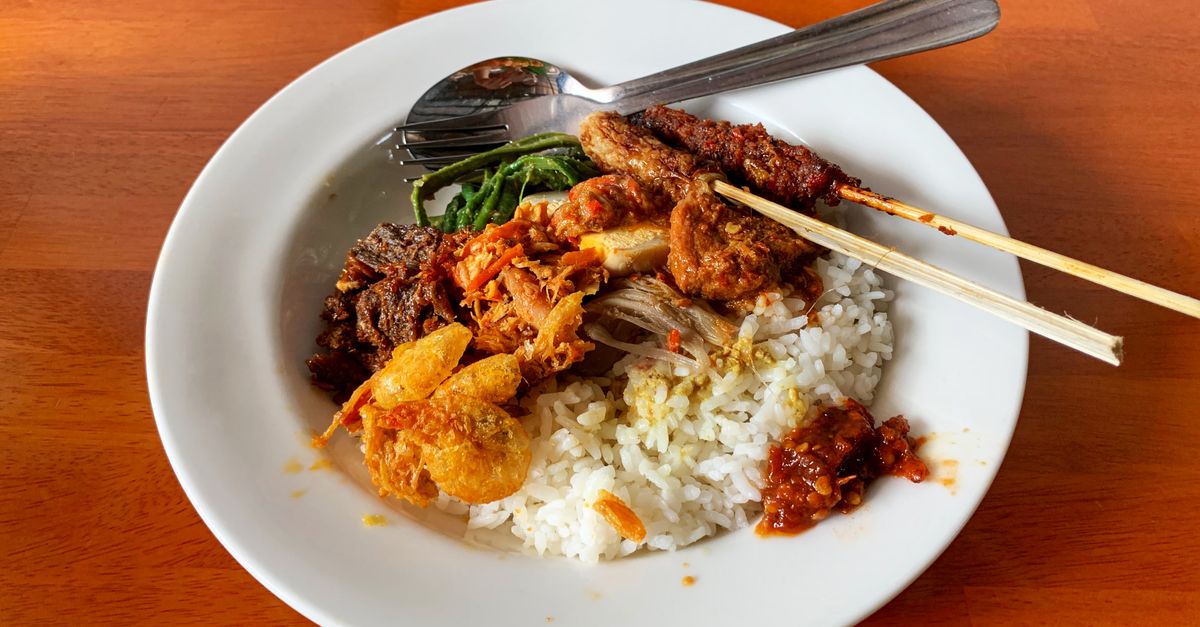
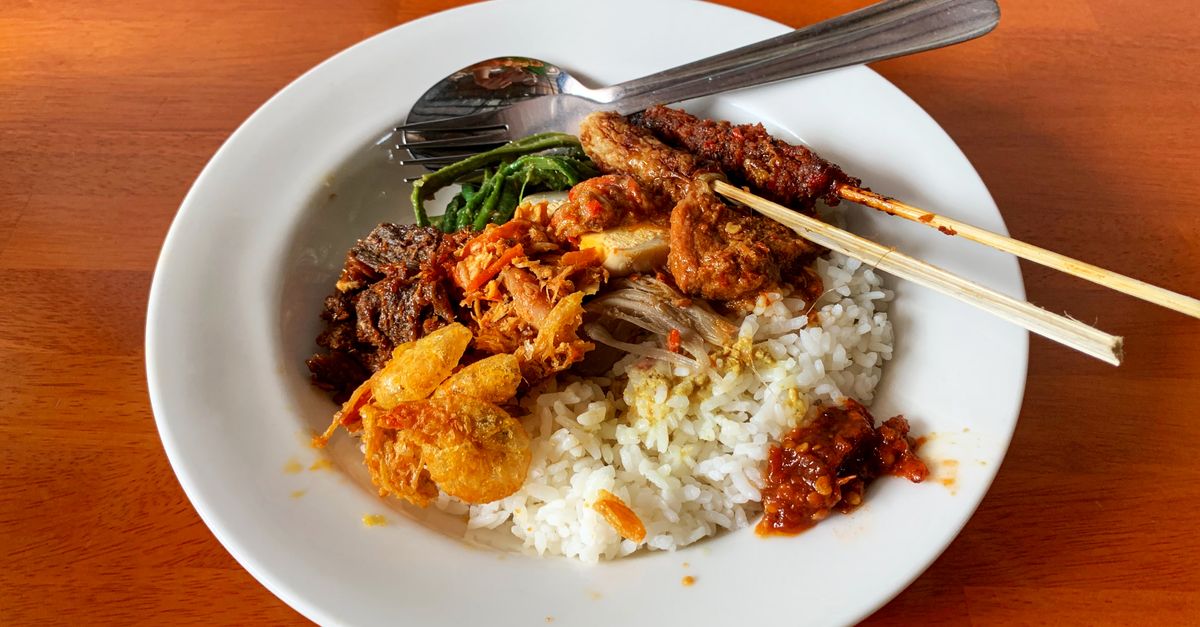
Portion sizes are the charm. Instead of committing to one big dish, you get a spoonful each of maybe six or seven things, so a single plate might carry shredded chicken, a stick of sate lilit, a scoop of lawar, some long beans, a boiled egg, crispy peanuts and a smear of sambal. Traditionally it’s dished from that glass case, sometimes wrapped in banana leaf for takeaway. No two plates are ever quite identical — which is the whole point.
What’s Actually on the Plate: Components Explained
Open up a plate of authentic balinese food and here’s the usual line-up. The base is always steamed white rice. Around it you’ll typically find shredded or spiced chicken (ayam), sate lilit — minced meat blended with coconut and spices, pressed onto a lemongrass or bamboo skewer and grilled — and lawar, a finely chopped salad of vegetables, grated coconut and minced meat tossed in spices.
Then come the supporting players: fried tempeh or tofu, long beans or water spinach, a boiled or spiced egg, crunchy fried peanuts, and often a shard of crispy chicken skin or a prawn cracker for texture. Sitting somewhere on the plate is the sambal — frequently sambal matah, sometimes a cooked chilli sambal — and this is where the heat lives, so approach with respect if you’re spice-shy.
In pork-eating (non-halal) warungs you’ll also see babi guling, Bali’s celebrated roast suckling pig, stuffed with turmeric, lemongrass, galangal and garlic and roasted until the skin shatters. Some traditional balinese local dishes on the plate carry real cultural weight — babi guling and lawar were historically reserved for temple ceremonies, weddings and a baby’s three-month blessing, before they became everyday warung food. When you eat mixed rice bali style, you’re eating a lot of history in small spoonfuls.
Regional and Warung Variations
No two warungs plate nasi campur the same way, and that’s half the fun of eating your way across the island. In the south — Jimbaran, Nusa Dua, Sanur — the famous specialists build their plate around nasi ayam bali, Balinese-style chicken: shredded chicken, sate lilit, spiced egg, lawar and a punchy sambal. These are the “nasi ayam” warungs, and locals are fiercely loyal to their favourite.
Head to Ubud and the character shifts. The Kedewatan area is legendary for its chicken-based nasi campur, and a warung-hopping day around nasi campur ubud rewards you with more herbal, less sweet flavours than you’ll find in tourist restaurants. Betutu country runs through here too, so you’ll often see ayam or bebek betutu — chicken or duck rubbed with bumbu betutu spice paste, wrapped in banana leaf and slow-cooked for hours until it’s falling apart.
Ceremonial and family-style versions go bigger still, piling on more proteins and side dishes. And there’s a common question worth settling: nasi campur vs nasi goreng. Nasi goreng is fried rice, cooked as one unified dish; nasi campur is plain steamed rice with separate toppings arranged around it. Different techniques, different experiences — order both across a trip and you’ll quickly pick your side.
Vegetarian and Halal Nasi Campur
Good news on both fronts, because eating well in Bali shouldn’t depend on your diet. A vegetarian nasi campur bali — sometimes called nasi sayur, “vegetable rice” — swaps the meat for jackfruit curry, long beans, sambal goreng tempeh, fried tofu and coconut, and it’s genuinely satisfying rather than an afterthought. Ubud, with its wellness leanings, is especially strong for plant-based versions, and plenty of warungs will happily build you a meat-free plate if you ask.
Halal travellers need to be a little more deliberate. Standard Balinese warungs often centre on pork, and babi guling is suckling pig, so it’s off the menu for a halal diet. The workaround is straightforward: seek out halal nasi campur at Muslim-owned or certified warungs, where the plate is built around chicken, egg, tempeh and vegetables instead. Ayam betutu and bebek betutu, the spiced slow-cooked chicken and duck, are safe and delicious choices at these venues.
The best-known halal-friendly name is Warung Wardani in Denpasar (Jl. Yudistira No. 2), a decades-old institution beloved by Muslim visitors who know that genuinely halal Balinese food isn’t always easy to find. A quiet tip: when in doubt, ask “halal?” directly — Balinese warung staff are used to the question and will point you right. As always with local food bali travellers rely on, a little communication goes a long way.
Honest Prices and Where to Eat It
Let’s talk money, because the gap between a warung and a restaurant is huge. A proper local plate of nasi campur warung food should cost you very little. As of 2026 — always worth confirming on the day — here’s a realistic nasi campur price bali guide from the legends:
- Warung Nasi Ayam Ibu Oki (Nusa Dua, Jimbaran, Kuta) — around Rp25,000–32,000 dine-in, from about Rp15,000 for takeaway. One dish done brilliantly: Balinese chicken nasi campur, spicy or non-spicy. Open daily roughly 7am–9pm.
- Warung Men Weti (Sanur) — a complete plate of nasi ayam campur around Rp30,000. A Sanur icon, but it only trades roughly 8am–1pm, so go early or miss out.
- Nasi Ayam Kedewatan Ibu Mangku (Ubud/Kedewatan) — roughly Rp25,000–35,000, a warung dating to the 1970s and, for many, the definitive nasi campur ubud experience.
- Warung Wardani (Denpasar) — the halal-friendly institution, plates from around Rp50,000, open roughly 09:00–16:00. Expect a queue between 10am and 2pm. For context, the best nasi campur bali plates on this list cost less than a coffee back home. Prices, hours and even whether a branch is trading can shift, so treat these as a guide and check locally before you set your heart on one. That’s part of the adventure — and part of why traditional balinese food tastes better when you’ve earned the seat.
A Plate Worth Travelling For
If you take one thing from this, let it be this: skip the pretty rice-terrace restaurant for one lunch and eat where the motorbikes are parked three deep outside a warung. Nasi campur is the truest, cheapest, most generous introduction to what to eat in bali — a whole island’s cooking, arranged around a mound of rice, for the price of a fancy juice.
Order it the local way. Point at what looks good, don’t fear the sambal (but respect it), and accept that your plate will never look like the last one. That variability isn’t a flaw — it’s the dish telling you what the kitchen cooked that morning, and it’s the closest most of us will get to eating in a Balinese home.
I still order nasi campur most days I’m on the island, and I’m still finding new warungs I’d happily drive across town for. If you’ve got a favourite spot — or you try one of these and disagree with me entirely — reply and tell me. And when you’re ready to plan the eating, read our guide to what a warung actually is and our walk through Bali’s street food and night markets next. See you at the glass case.
FAQs
What is nasi campur?
Nasi campur is a plate of steamed rice served with several small portions of meat, vegetables, egg, peanuts and sambal. The name means “mixed rice” in Indonesian, and the idea is variety — a little taste of many things rather than one big main dish.
What does nasi campur bali usually include?
A typical plate has rice plus shredded or spiced chicken, sate lilit, lawar, tempeh or tofu, long beans, a boiled egg, peanuts and sambal. In pork-eating warungs you’ll also find babi guling, Bali’s roast suckling pig. No two warungs plate it identically.
How much does nasi campur cost in Bali?
At a local warung, expect roughly Rp25,000–50,000 (about £1.25–£2.50) as of 2026. Famous spots like Ibu Oki sit around Rp25,000–32,000, while Warung Wardani in Denpasar is closer to Rp50,000. Hotel and restaurant versions cost several times more.
Is nasi campur spicy?
It can be, but you’re usually in control. The heat comes from the sambal on the side — often sambal matah, a raw chilli-shallot relish — so you can eat around it or ask for a milder plate. Many warungs offer spicy and non-spicy versions.
What’s the difference between nasi campur and nasi goreng?
Nasi goreng is fried rice cooked as a single dish, while nasi campur is plain steamed rice with separate toppings arranged around it. One is a stir-fry; the other is a sampler plate. Both are worth trying on any Bali trip.
Is there a vegetarian nasi campur?
Yes. A vegetarian version, sometimes called nasi sayur, swaps meat for jackfruit curry, long beans, sambal goreng tempeh, fried tofu and coconut. Ubud in particular has excellent plant-based options, and most warungs will build a meat-free plate on request.
Is nasi campur halal?
It depends on the warung. Standard Balinese warungs often centre on pork, including babi guling, which isn’t halal. For halal nasi campur, choose Muslim-owned or certified venues such as Warung Wardani in Denpasar, where the plate is built around chicken, egg and vegetables.
Where is the best nasi campur in Bali?
There’s no single winner, but legendary names include Warung Nasi Ayam Ibu Oki (South Bali), Warung Men Weti (Sanur), Nasi Ayam Kedewatan Ibu Mangku (Ubud) and Warung Wardani (Denpasar, halal-friendly). Locals argue passionately about their favourite — try a few and pick your own.
What is sate lilit?
Sate lilit is minced meat — often chicken, pork or fish — mixed with grated coconut and Balinese spices, then pressed onto a lemongrass or bamboo skewer and grilled. It’s a common and delicious component of a nasi campur plate, and one of the island’s signature dishes.
How do you eat nasi campur?
Simply mix a little of each component with a forkful of rice as you go, so every bite is slightly different. Many Balinese eat with the right hand rather than cutlery. There’s no wrong order — the plate is designed to be grazed across.
Before you go — I wrote this in 2026 and double-checked every price, fee, opening time and rule I could, but Bali changes fast. Treat the figures here as a guide and confirm the latest details before you book or travel.